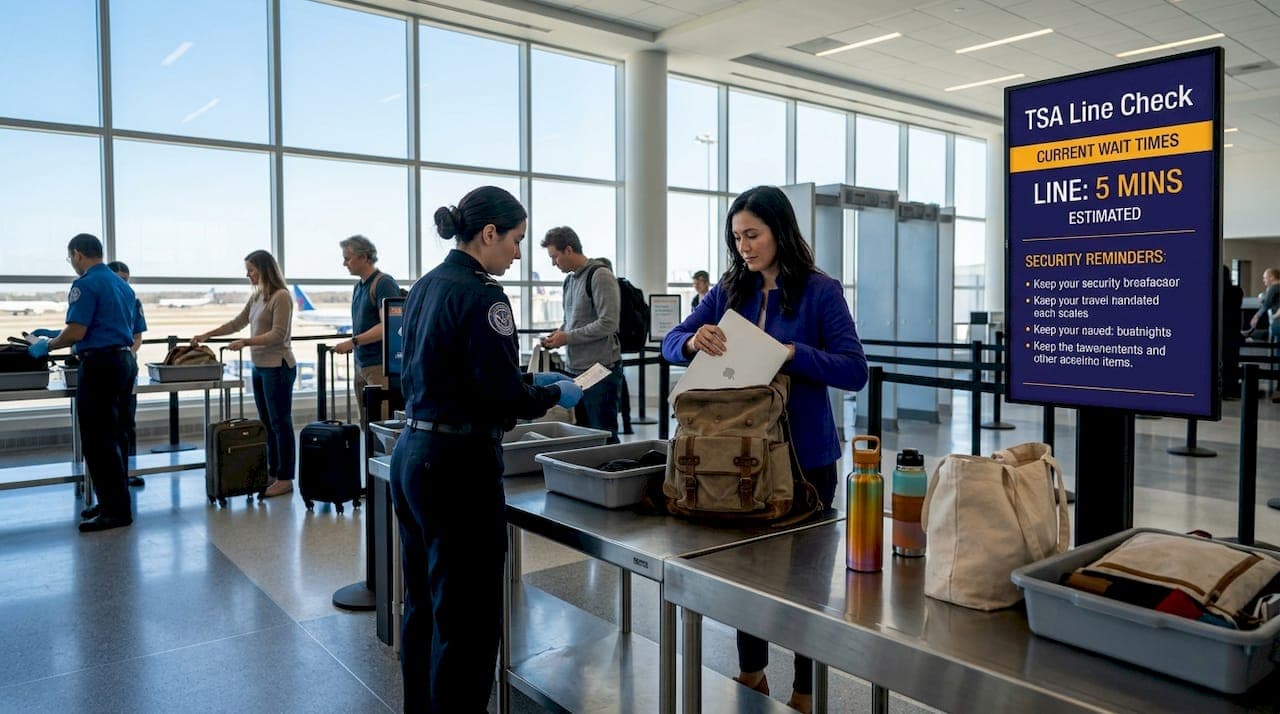
You glance at the posted TSA wait time, see "12 minutes," and feel relieved. Then you join a line that stretches past the terminal entrance and stand there for 45 minutes. Sound familiar? Understanding what causes TSA screening delays goes well beyond reading the sign at the checkpoint. Staffing crises, traveler mistakes, and flawed reporting methods all stack up against you in ways that are rarely explained clearly. This guide breaks down every major factor so you can stop guessing and start planning smarter.
Table of Contents
- Key takeaways
- What causes TSA screening delays in 2026
- Traveler mistakes that slow down the whole line
- Why posted wait times are often misleading
- Airport operations and local factors that create bottlenecks
- My take on TSA delays after years of watching this system
- Plan smarter with live TSA wait time data
- FAQ
Key takeaways
| Point | Details |
|---|---|
| Staffing shortages drive long waits | TSA call-out rates hit record highs in 2026, forcing lane closures and creating waits exceeding 3 hours. |
| Posted times are minimums, not averages | Official wait times exclude overflow lines, so actual delays can be double what is posted. |
| Traveler errors trigger extra screening | Forgotten liquids, unpacked electronics, and full pockets add 10 to 20 minutes per person and slow everyone behind you. |
| Airport operations create independent bottlenecks | Flight schedule clusters and local events spike checkpoint traffic even when staffing is adequate. |
| Real-time data helps you plan better | Using live wait time tools before you leave home gives you a realistic picture of what to expect at the checkpoint. |
What causes TSA screening delays in 2026
The single biggest driver of TSA screening delays right now is staffing. During the partial government shutdown that ran from February through March 2026, 50,000 TSA workers went unpaid, triggering a wave of call-outs and resignations that crippled security operations at airports across the country.
Nationally, TSA officer call-out rates jumped from a baseline of about 2% to between 6% and 9% during the shutdown. At specific airports, the numbers were far worse. JFK saw call-out rates hit 21%. Houston Hobby recorded 55% on peak days. The result was predictable: fewer open lanes, longer lines, and wait times that surpassed three hours at several major hubs.
What makes this problem especially hard to fix quickly is the training pipeline. Training new TSA officers takes months, meaning you cannot simply hire your way out of a staffing crisis in a matter of weeks. Every resignation or extended absence creates a gap that takes months to fill, which is why the effects of a single funding lapse can ripple through the system long after the shutdown ends.
Pro Tip: Check JFK live wait times before heading to the airport during any period of federal budget uncertainty. Staffing conditions can change rapidly, and real-time data gives you a much more accurate picture than posted estimates.
The table below shows how staffing shortages translated into wait time surges at major airports during the 2026 shutdown period.
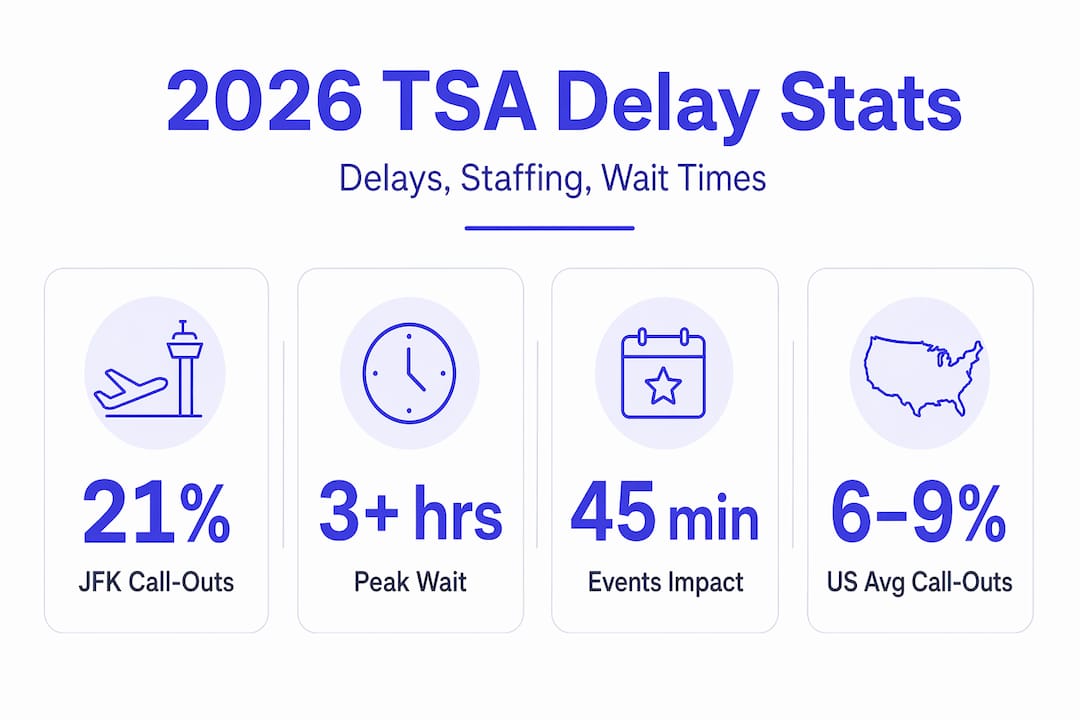
| Airport | Reported call-out rate | Peak wait time |
|---|---|---|
| JFK (New York) | 21% | 3+ hours |
| Houston Hobby | 55% on peak days | Severe delays |
| National average | 6 to 9% | Significant surges |
| Baseline (pre-shutdown) | ~2% | Standard wait times |
Traveler mistakes that slow down the whole line
Staffing is not the only reason for long waits. A significant share of common TSA delay causes come directly from passenger behavior at the checkpoint. These are mistakes that are completely avoidable, yet they happen hundreds of times a day at every major airport.
The most frequent offenders include:
- Leaving electronics in bags. Any device larger than a cell phone needs to come out and go in a separate bin. Laptops, tablets, and e-readers left in bags trigger automatic secondary screening.
- Packing liquids incorrectly. Containers over 3.4 oz or liquids not placed in a clear quart-sized bag will get flagged every time. This is one of the most common checkpoint errors TSA officers deal with.
- Not emptying pockets. Keys, coins, belts, and phones left in pockets cause body scanner alarms and require a manual pat-down.
- Overpacked carry-on bags. Dense, tightly packed luggage is harder for X-ray operators to read clearly, which increases the likelihood of a manual bag check.
What many travelers do not realize is that TSA scanners flag more than just weapons. Certain medications, large amounts of currency, and dense electronics can all trigger a manual bag check. If you are traveling with any of these items, expect additional screening and factor that time into your arrival plan.
The cascade effect is real. Each secondary screening adds 10 to 20 minutes per person, and that delay does not stay contained to one traveler. It backs up the entire lane behind them. Traveler compliance and packing habits directly affect overall checkpoint throughput, which means your preparation (or lack of it) affects everyone around you.
Pro Tip: Wear slip-on shoes, pack your liquids bag at the very top of your carry-on, and put your phone in your jacket pocket before you get in line. You can move through the checkpoint in under two minutes with the right preparation.
Why posted wait times are often misleading
Here is something that surprises most travelers: the wait time posted at the checkpoint does not measure what you think it does. TSA wait times only count the time from when you enter the checkpoint queue, not from when you join the overflow line that may stretch hundreds of yards back into the terminal.
LaGuardia Airport is a clear example of this. The airport explicitly states that its posted wait times exclude any overflow beyond the checkpoint queue area. If you are standing in an overflow line, you are not even being counted yet. That means the clock on your "official" wait has not started.
Posted TSA wait times are a minimum floor, not a ceiling. During peak periods or staffing crises, actual delays can be double what is posted once overflow lines are factored in.
The reporting system itself adds to the problem. Wait time data is not centralized across airports. Different airports use different methods, including sensors, crowd-sourced reports, and predictive modeling. The result is inconsistent accuracy across the country. Some airports have even been known to remove wait time displays during staffing crises to avoid confusion, which leaves travelers with no data at all.
The practical takeaway is straightforward. Treat any posted wait time as the best-case scenario. During high-traffic periods, add at least 50% to whatever number you see. During staffing disruptions, overflow lines can stretch hundreds of yards and remain completely uncounted in official estimates. Planning around the posted number alone is how travelers miss flights.
Airport operations and local factors that create bottlenecks
Even at airports with adequate staffing, factors impacting TSA efficiency can create serious slowdowns. Flight schedule design is one of the biggest. When multiple flights depart within the same 30 to 60 minute window, hundreds of passengers converge on the checkpoint simultaneously. The checkpoint was not built to absorb that surge instantly, regardless of how many lanes are open.
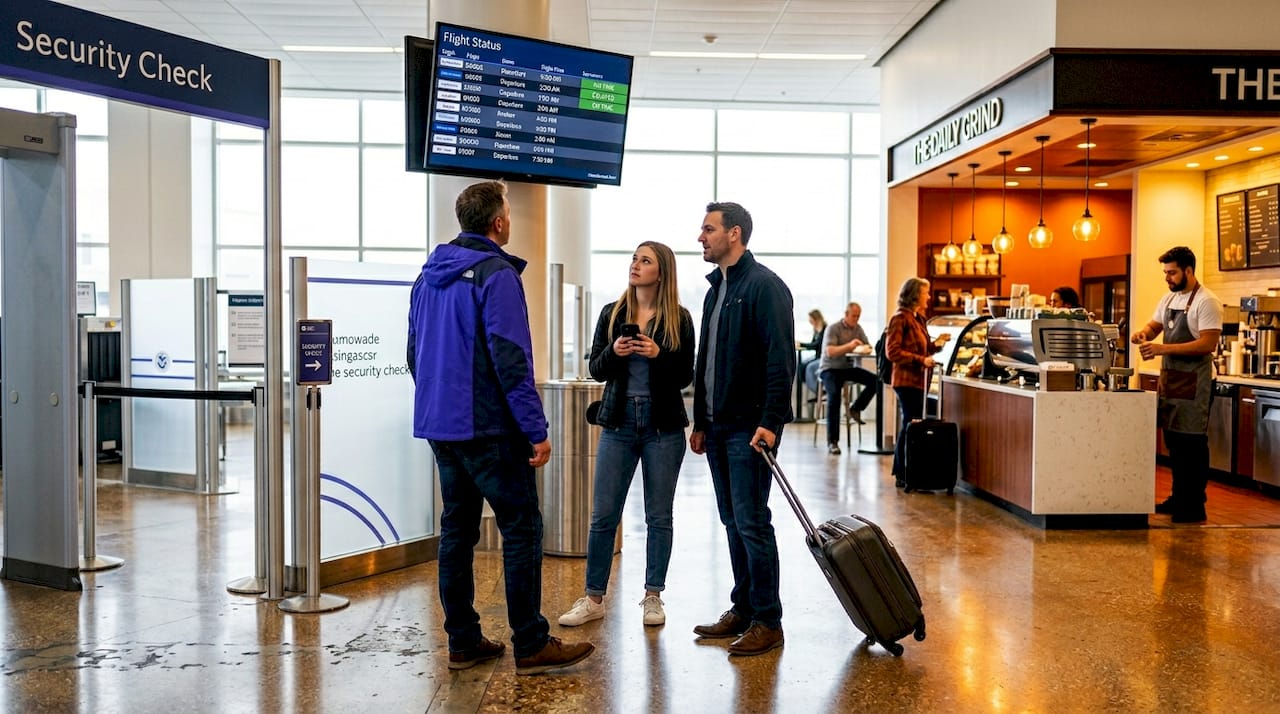
Large local events compound this effect significantly. LAX faced 45-minute waits driven by a combination of morning flight blocks, nearby conventions, and increased screening thoroughness. None of those factors required a staffing shortage to create a serious delay. They stacked on top of each other and overwhelmed normal processing capacity.
Flight schedules and large local events can spike checkpoint traffic independently of staffing challenges, which explains why two travelers flying from the same airport on different days can have completely different experiences. The airport did not change. The staffing level may have been identical. The circumstances around the checkpoint were entirely different.
The table below compares delay risk factors across different airport scenarios.
| Scenario | Staffing level | Delay risk | Key contributing factor |
|---|---|---|---|
| Morning departure block | Adequate | High | Multiple flights departing simultaneously |
| Convention or major event in city | Adequate | High | Surge in passenger volume |
| Staffing shortage, normal volume | Low | Very high | Fewer open lanes |
| Off-peak travel, no events | Adequate | Low | Spread-out passenger flow |
| Staffing shortage plus event | Low | Extreme | Combined volume and capacity gap |
The strategies that work best here are practical. Check the ATL live checkpoint or your specific departure airport before you leave home. Look at historical patterns for your departure time. If you are flying out of a hub airport on a Monday morning or a Sunday afternoon, build in extra time regardless of what the posted wait shows.
My take on TSA delays after years of watching this system
I have spent more than a decade watching travelers make the same mistakes at airport security, and the one that frustrates me most is trusting the posted wait time as a hard number. People treat it like a bus schedule. It is not.
What I have learned is that the travelers who consistently get through security without stress share one habit: they plan for the worst version of the checkpoint, not the average version. They arrive early, they pack correctly, and they check real-time data before they leave home. They are not anxious. They are prepared.
The 2026 shutdown made something clear that the system had been quietly hiding for years. TSA efficiency is fragile. A funding lapse, a wave of call-outs, a single major event in a city, and the whole thing can back up for hours. TSA PreCheck helps, but it is not a guarantee. During the worst days of the 2026 shutdown, even PreCheck lanes were affected by lane closures and reduced staffing.
My honest advice: stop relying on airport-posted numbers and start using tools that aggregate live, verified data. The posted sign at the checkpoint is telling you what happened earlier. You need to know what is happening right now. That shift in how you gather information before you travel will do more for your airport experience than any other single change you can make.
— Lance
Plan smarter with live TSA wait time data
Understanding why TSA lines get long is only half the equation. The other half is knowing what the line looks like right now, before you leave your house.
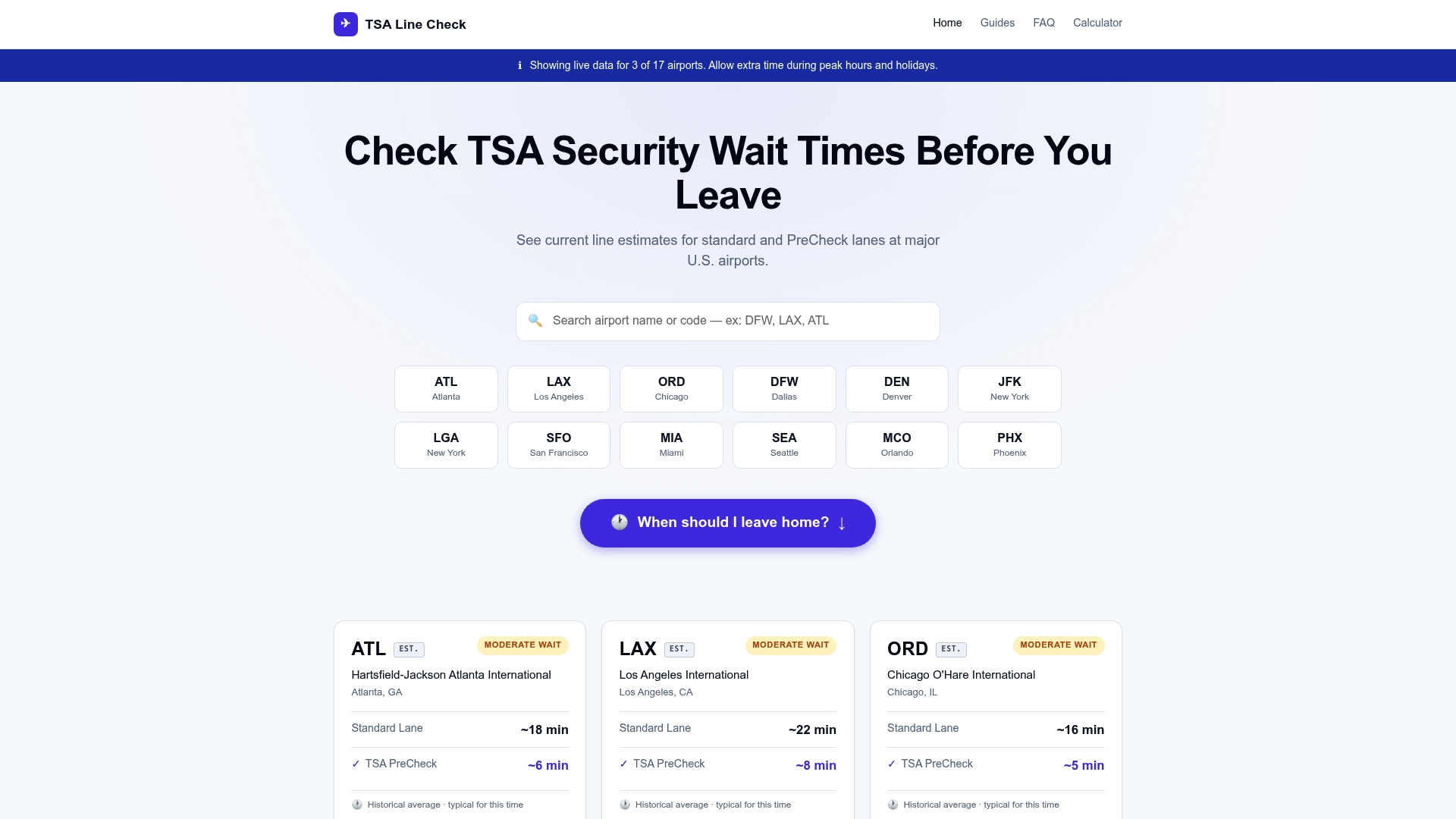
Tsalinecheck pulls together real-time wait time data from verified traveler reports and historical patterns across major U.S. airports. You can check LAX security wait times, JFK live checkpoint data, and ATL current wait times in seconds. The platform covers both standard and TSA PreCheck lines, so you know exactly which lane to plan around. Whether you fly once a year or every week, checking Tsalinecheck before you leave home takes 30 seconds and can save you an hour of unnecessary stress at the airport.
FAQ
What is the main cause of TSA delays right now?
The primary driver of TSA screening delays in 2026 is staffing shortages caused by the partial government shutdown, which pushed national call-out rates from 2% to as high as 55% at some airports and forced widespread lane closures.
Why do posted TSA wait times seem shorter than actual waits?
Posted wait times only measure time from checkpoint queue entry, excluding overflow lines that can stretch hundreds of yards into the terminal, meaning actual delays are often double the posted estimate.
What traveler mistakes cause the most TSA screening delays?
Failing to remove laptops and tablets from bags, packing liquids incorrectly, and leaving items in pockets are the most frequent errors, each adding 10 to 20 minutes of secondary screening time per person.
Does TSA PreCheck eliminate wait time delays?
TSA PreCheck significantly reduces wait times by allowing travelers to keep shoes on and laptops in bags, but during major staffing shortages, PreCheck lanes can also be affected by reduced officer availability and lane closures.
How can I find accurate TSA wait times before I travel?
Use a real-time tracking tool like Tsalinecheck, which aggregates live traveler reports and historical data to give you a current and accurate picture of wait times at major U.S. airports before you leave home.