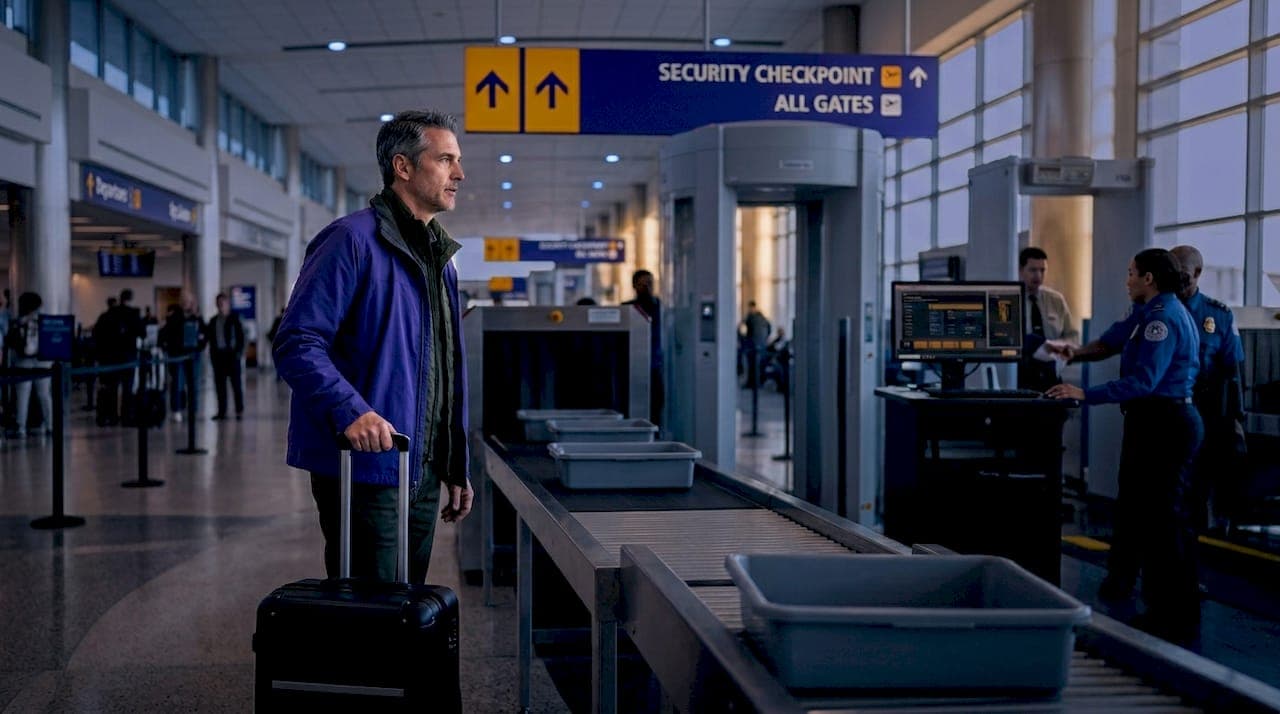
Walking through airport security feels routine until something triggers a secondary check and you realize you have no idea what just scanned you. The airport security screening equipment list is longer than most travelers expect, and understanding what each machine does changes how you prepare for your trip. From millimeter wave body scanners to CT baggage systems and explosives trace detectors, today's checkpoints run on layered technology designed to catch threats without slowing everyone down. This guide breaks down every major piece of equipment in use at U.S. airports as of 2026, explains how each one works, and tells you what it means for your experience at the checkpoint.
Table of Contents
- Key takeaways
- The full airport security screening equipment list explained
- 1. Advanced Imaging Technology (AIT) body scanners
- 2. Walk-through metal detectors (WTMD)
- 3. Shoe Analyzer Metal Detector (SAMD)
- 4. Computed Tomography (CT) baggage scanners
- 5. Conventional X-ray baggage machines
- 6. Explosives Detection Systems (EDS)
- 7. Explosives Trace Detection (ETD) machines
- 8. Bulk Alarm Resolution Technology (BRT)
- 9. Credential Authentication Technology (CAT) systems
- 10. Bulk liquid scanners
- 11. AI-powered threat detection software
- How these technologies compare
- What screening equipment means for your travel experience
- My take on airport security technology and what travelers miss
- Plan your security time as well as you know the equipment
- FAQ
Key takeaways
| Point | Details |
|---|---|
| Multiple technology layers work together | Airport checkpoints use passenger, baggage, and trace detection systems simultaneously to cover different threat types. |
| CT scanners reduce unpacking | 3D baggage scanners let you keep electronics and liquids in your bag at many airports, saving time. |
| AI is reshaping detection accuracy | AI-powered algorithms now reduce false alarms and speed up decision-making at modern checkpoints. |
| Food can trigger secondary screening | Dense items like peanut butter and hummus can look like explosives on X-ray, causing extra checks. |
| Opt-out rights have exceptions | Passengers flagged as selectees on their boarding pass cannot opt out of Advanced Imaging Technology screening. |
The full airport security screening equipment list explained
Understanding the airport security screening equipment list starts with knowing that no single machine does everything. TSA checkpoints use overlapping systems that screen passengers, carry-on bags, checked luggage, and even the air around you. Each technology targets a specific threat category, and together they create a security net that's much harder to slip through than it looks from the passenger side.
The major categories break down like this:
- Passenger screening: Body scanners (Advanced Imaging Technology), walk-through metal detectors, shoe analyzers
- Baggage screening: X-ray machines, CT scanners, Explosives Detection Systems (EDS)
- Trace detection: Explosives Trace Detection (ETD) swabs, Bulk Alarm Resolution Technology (BRT)
- Credential verification: Credential Authentication Technology (CAT) systems, biometric identification
- Surveillance and behavioral detection: CCTV systems, Behavior Detection Officers (BDOs)
Each category feeds information to TSA officers who make final decisions. The equipment flags, but humans confirm.
Pro Tip: If you hold TSA PreCheck, you will typically use older walk-through metal detectors rather than full body scanners, which means faster lanes and no need to remove shoes or laptops.
1. Advanced Imaging Technology (AIT) body scanners
AIT units are the large booth-style machines you step into and raise your arms above your head. They use millimeter wave technology to create a generic outline of your body and flag any anomalies, whether metallic or nonmetallic. The image displayed is a generic avatar, not a photo of you, which addresses earlier privacy concerns with older backscatter units.
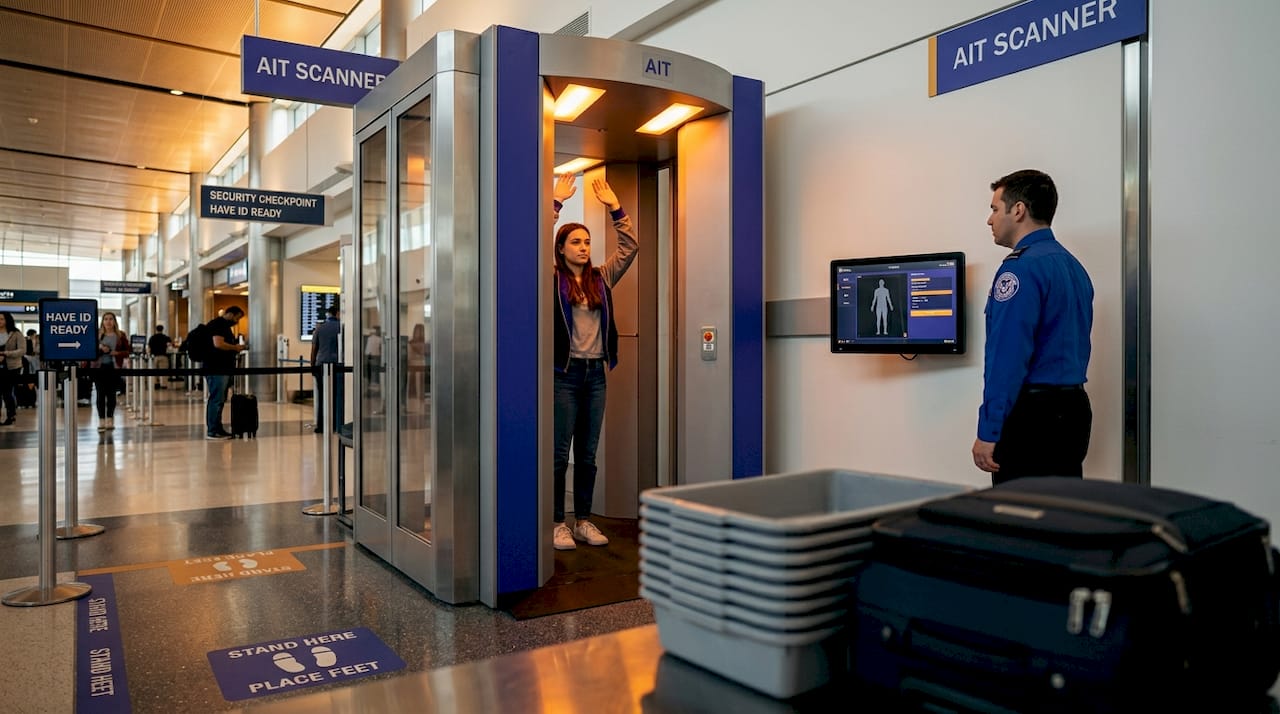
TSA has deployed approximately 1,200 AIT units across nearly 400 airports nationwide. That scale makes AIT the backbone of passenger screening at major U.S. airports. The scan takes about two seconds and the system automatically highlights areas of concern on a generic body outline for the officer to review.
2. Walk-through metal detectors (WTMD)
Walk-through metal detectors are the older, arch-style machines still used in TSA PreCheck lanes and at smaller airports. They detect metallic objects by generating an electromagnetic field that reacts when metal passes through it. They are fast and reliable for metal threats but cannot detect nonmetallic items like ceramic blades, plastic explosives, or dense liquids.
WTMDs remain valuable because of their speed and low cost per screening. At high-volume airports like Chicago O'Hare, keeping PreCheck lanes moving with WTMDs while standard lanes use AIT units helps manage passenger flow efficiently.
3. Shoe Analyzer Metal Detector (SAMD)
The SAMD is one of the newer additions to the airport security tools lineup. It allows passengers to keep their shoes on while walking through a specialized detector that scans footwear separately from the rest of the body. The SAMD uses advanced algorithms to distinguish between the normal metal in shoe construction, like eyelets and shanks, and actual threats. This dramatically reduces the number of passengers pulled aside for shoe removal.
This device directly addresses one of the biggest checkpoint bottlenecks. Removing shoes slows everyone down, and most alerts are false positives from ordinary footwear. SAMD filters out the noise so officers can focus on real concerns.
4. Computed Tomography (CT) baggage scanners
CT scanners are the most significant upgrade to baggage screening in the past decade. Unlike flat X-ray machines that produce a two-dimensional image, CT scanners create 3D images that allow officers to rotate and examine items from any angle without opening the bag. This means you can often leave your laptop and liquids inside your carry-on rather than pulling them out.
The 3D view gives TSA officers far more detail about what an object actually is, not just what shape it casts on a flat image. CT deployment is expanding rapidly across major airports as part of TSA's broader technology investment program.
5. Conventional X-ray baggage machines
Standard X-ray machines are still widely used, particularly for checked luggage and at smaller checkpoints. They work by passing X-rays through a bag and measuring how much radiation is absorbed by different materials. Dual-energy technology color-codes materials by density: organic materials appear orange, inorganic materials appear blue, and metals appear green or dark.
This color-coding gives operators a fast visual read on what's inside a bag. A bright orange mass might be food, clothing, or something worth a closer look. Officers are trained to recognize patterns that warrant a manual check.
6. Explosives Detection Systems (EDS)
EDS units are large machines used primarily in checked baggage screening, often integrated directly into airport baggage conveyor systems. They use CT-based imaging combined with automated threat detection software to screen every checked bag for explosive materials. If the system flags a bag, it is diverted for additional screening before it reaches the aircraft.
EDS machines operate largely out of passenger view, but they are one of the most critical layers of airport baggage screening equipment. Every checked bag at a U.S. airport goes through one.
7. Explosives Trace Detection (ETD) machines
ETD machines analyze swabs taken from hands, bags, or surfaces for microscopic traces of explosive compounds. You have probably seen TSA officers swipe a small cloth across your hands or luggage and then insert it into a device that looks like a desktop printer. That device is an ETD machine, and it can detect trace amounts of hundreds of different explosive materials in seconds.
ETD is used both as a primary screening tool and as a follow-up when other equipment flags something. It is also commonly used for random additional screening, which is separate from any specific threat detection.
8. Bulk Alarm Resolution Technology (BRT)
BRT is a newer category of airport screening equipment designed to resolve alarms triggered by liquids, powders, and gels without requiring manual searches. When a scanner flags a suspicious substance, BRT can analyze it more precisely to determine whether it is actually dangerous. TSA awarded a contract in May 2026 to deploy BRT at 11 airports in FIFA World Cup U.S. host cities, signaling a major push toward faster, more accurate substance screening.
This technology matters because liquids and powders have historically been a gray area for airport security systems. BRT closes that gap without forcing every traveler with a water bottle or protein powder to go through a lengthy manual check.
9. Credential Authentication Technology (CAT) systems
CAT machines are the kiosks where you scan your ID or boarding pass at the front of the security line. They verify that your identity document is authentic and that your name matches your travel reservation in real time. Newer CAT-2 units include a camera that uses facial recognition to confirm you are the person on the ID, removing the need for a TSA officer to manually compare your face to your document.
Biometric verification through CAT systems is expanding at airports like Los Angeles International and Atlanta Hartsfield-Jackson. Participation is voluntary for U.S. citizens, but the technology speeds up the identity check step considerably.
10. Bulk liquid scanners
Separate from BRT, dedicated bulk liquid scanners are used at some international departure gates and select domestic checkpoints to screen sealed bottles and containers. These devices use spectroscopy to analyze the contents of a container without opening it. They can distinguish between water, alcohol, flammable liquids, and dangerous chemicals.
These scanners are particularly common at gates serving international flights, where duty-free liquids purchased after security still need to be verified before boarding.
11. AI-powered threat detection software
This is not a standalone machine you walk past, but it is increasingly built into the software running CT scanners, EDS units, and AIT systems. AI-based algorithms enable real-time analysis of complex checkpoint data, increasing detection accuracy and reducing false alarms. The AI does not make final decisions. It flags anomalies and presents them to human officers for review.
The practical benefit for travelers is fewer false positives. AI helps the system tell the difference between a dense sandwich and a suspicious package, which means fewer bags pulled for manual inspection and shorter lines overall.
How these technologies compare
Here is a side-by-side look at the key airport security systems and what they actually do for detection and traveler experience:
| Equipment | Detects | Passenger impact | Key advantage |
|---|---|---|---|
| AIT body scanner | Metal and nonmetallic threats | Brief pause, arms raised | Catches non-metal items |
| Walk-through metal detector | Metal only | Fast, no pose required | High throughput speed |
| CT baggage scanner | Explosives, weapons, liquids | No need to unpack | 3D imaging, fewer false alarms |
| Standard X-ray | Shapes and densities | May need to unpack electronics | Widely deployed, low cost |
| ETD swab machine | Explosive residue | Quick swab of hands or bag | Catches trace amounts |
| BRT | Liquids, powders, solids | Replaces manual liquid checks | Faster alarm resolution |
| CAT system | Identity fraud | ID scan, possible facial match | Removes manual ID checks |
Pro Tip: At airports that have deployed CT scanners, look for signs at the bin area saying you can leave laptops and liquids in your bag. Not every lane at every airport has CT yet, so confirm before you skip the unpacking step.
What screening equipment means for your travel experience
Knowing the equipment is one thing. Knowing how to move through it smoothly is another. A few specific situations catch travelers off guard regularly.
Certain food items like peanut butter, hummus, and dense cheese can trigger secondary screening because their density looks similar to explosive materials on X-ray. If you are carrying these in your carry-on, pack them where they are easy to pull out for a separate scan if needed.
On the body scanner side, passengers flagged as selectees on their boarding pass cannot opt out of AIT screening. Everyone else can request a pat-down instead. This is worth knowing if you have a medical device or implant that makes scanner screening uncomfortable.
Here are a few practical steps to move through security faster:
- Place electronics in an outer pocket of your bag for easy access if the airport uses standard X-ray
- Wear slip-on shoes at airports that have not yet deployed SAMD
- Keep liquids in a clear, accessible bag even if the airport has CT scanners, as a backup
- Remove heavy metal items like belts and large jewelry before reaching the bin area
Knowing what triggers secondary screening is not about gaming the system. It is about being prepared so a routine checkpoint does not turn into a 20-minute delay.
TSA's fiscal year 2027 budget proposal allocates over $390 million for aviation screening system upgrades, meaning the equipment list will keep evolving. Airports are adding CT scanners, expanding biometric verification, and deploying newer trace detection tools. Staying current on what your specific airport uses helps you prepare accurately.
My take on airport security technology and what travelers miss
I have spent years paying close attention to how checkpoint technology evolves, and the thing most travelers miss is how much the equipment has improved at reducing unnecessary friction. The frustration people feel at security is often a holdover from older systems that genuinely were slower and less accurate.
What I find underappreciated is the SAMD shoe scanner. Shoe removal is one of the most disliked parts of airport security, and most of those alarms are completely benign. The fact that this device exists and is starting to roll out more broadly is genuinely good news for anyone who travels frequently.
I also think the conversation about AI in screening deserves more nuance than it usually gets. People hear "AI" and assume surveillance overreach. In practice, AI lowering false alarm rates means fewer innocent travelers get pulled aside. That is a direct benefit to you, not a threat.
The privacy tension around biometric CAT systems is real and worth watching. But for travelers who opt in, the speed improvement is noticeable. My honest advice: understand the tools being used on you. It makes the whole experience less stressful and helps you make informed choices about things like opting out of AIT or declining facial recognition.
— Lance
Plan your security time as well as you know the equipment
Understanding the equipment is half the battle. The other half is knowing how long the line will be when you get there. Tsalinecheck gives you real-time TSA wait times based on verified traveler reports and historical data for major U.S. airports, so you can plan your arrival with confidence. Whether you are flying out of Dallas/Fort Worth or checking Boston Logan before a morning flight, Tsalinecheck shows you both standard and TSA PreCheck line estimates. You can also calculate your ideal departure time from home so you arrive at the checkpoint with exactly the right buffer. Visit Tsalinecheck before your next trip.
FAQ
What equipment does TSA use to screen passengers?
TSA uses Advanced Imaging Technology body scanners, walk-through metal detectors, and Shoe Analyzer Metal Detectors to screen passengers at checkpoints. Credential Authentication Technology systems verify identity at the front of the line.
Can CT scanners replace the need to remove laptops and liquids?
Yes. CT scanners produce 3D images that allow TSA officers to inspect carry-on contents without unpacking, so many airports no longer require you to remove electronics or liquids in CT-equipped lanes.
Why do food items trigger airport security alarms?
Dense foods like peanut butter, hummus, and hard cheeses absorb X-rays in patterns similar to explosive materials, causing the scanner to flag them. Placing these items in an easily accessible spot in your bag speeds up the resolution.
What is Bulk Alarm Resolution Technology?
BRT is a screening device that analyzes liquids, powders, and solids flagged by other scanners to confirm whether they are actually dangerous, reducing the need for manual searches and speeding up checkpoint processing.
Can you opt out of the body scanner at TSA?
Most passengers can request a pat-down instead of AIT screening. The exception is passengers designated as selectees on their boarding pass, who are required to go through AIT and cannot opt out.